
Warm Minimalism 2026: 7 Rules for a Cozy, Edited Home
- Dec 16, 2025
- 10 min read
Updated: 2 days ago
Minimalism is not only still relevant in 2026, it has evolved. The cold, all-white version is fading. Warm Minimalism has replaced it: earthy neutrals (warm beige, mushroom, terracotta), natural textures (linen, wool, raw wood), and intentional objects rather than bare surfaces. The 7 core rules are: warm neutrals over white, one quality texture, meaningful objects with space to breathe, layered 2700K lighting, one-in one-out, start in the bedroom, and never sacrifice function for aesthetics.
When I first went minimalist, I cried over a lamp.
Not a beautiful, meaningful lamp. A beige IKEA floor lamp I had owned for four years and barely noticed. But the moment I decided to let it go, suddenly it felt irreplaceable. That is the strange psychology of less it forces you to confront what you actually value.
I have been living in a minimalist home since 2021, and I want to be honest with you: the first version was a disaster. White walls, empty shelves, and a living room that felt like a waiting room at a very clean dentist's office. Cold. Sterile. Deeply uninviting.
What changed everything was discovering Warm Minimalism the approach dominating interiors in 2026. This guide will walk you through whether it is right for you, and exactly how to do it without making my early mistakes. Much of this shift is influenced by the rise of Japandi interior design, which taught us that a home can be incredibly edited yet still feel deeply rooted in natural warmth and organic textures.

What Is Warm Minimalism?
The minimalism of 2015 was about subtraction. White on white, glass, steel, empty surfaces. It looked incredible in magazine photoshoots and felt deeply uncomfortable to live in.
Warm Minimalism is about intentionality. It asks: what do you actually need, and what actually brings you joy and then lets those things breathe.
The 2026 version embraces earthy neutrals over stark white warm beige, mushroom, terracotta, sage. It embraces natural textures wool throws, linen curtains, raw wood, handmade ceramics. It allows intentional objects a small stack of books, a ceramic bowl, one meaningful piece. And it welcomes lived-in imperfection a slightly rumpled throw is not a failure, it is a home.
Think of it less as "remove everything" and more as "keep only what deserves the space."
Cold Minimalism vs. Warm Minimalism: A 2026 Comparison
Cold Minimalism (2015) | Warm Minimalism (2026) | |
Colour palette | Stark white, cool grey, black | Warm beige, mushroom, greige, terracotta |
Materials | Glass, steel, polished surfaces | Wool, linen, raw wood, clay, ceramic |
Objects | Zero clutter, bare surfaces | Intentional objects, curated ceramics |
Feel | Gallery, showroom, performance | Calm, inhabited, human |
Lighting | Recessed, cool white 4000–5000K | Warm bulbs 2700K, layered, natural |
Flexibility | Rigid, high-maintenance | Forgiving, liveable |
Cortisol impact | Neutral to slight increase | Lowers |
Mental health | Can feel stressful to maintain | Actively reduces anxiety |
2026 relevance | Declining | Dominant trend |
If you have been avoiding minimalism because it felt cold or unachievable this shift is for you.

My Minimalist Failures (And What They Taught Me)
Let me tell you about my living room in 2022.
I had followed every rule. Neutral walls. No cushions too much clutter. A single coffee table with nothing on it. My friends came over and immediately asked if I had just moved in. One of them whispered: "Nina, where do you live?"
The problem was I had confused minimalism with emptiness. I was performing the aesthetic rather than living it.
Failure 1: I removed everything sentimental. My grandmother's small ceramic bowl had been sitting on my shelf for years. I decided it was clutter. Three weeks later I retrieved it from a box in the storage room. That bowl is minimalism done right one meaningful object given proper space.
Failure 2: I went all-white. White walls, white sofa, white rug. By March it looked grey and depressing. Now I have warm off-white walls, a sand-coloured linen sofa, and a terracotta throw. The same discipline, an entirely different feeling.
Failure 3: I thought minimalism was permanent. Life is seasonal. Some months my shelves are busier. That is allowed. The goal is intention, not rigidity.
Is Minimalism Right for You? An Honest Quiz
1. When you walk into a cluttered room, do you feel:
A) Overwhelmed and anxious → Minimalism will genuinely improve your daily wellbeing
B) Cozy and comfortable → Warm Minimalism’s “intentional clutter” approach will suit you better than strict minimalism
C) Fine either way → You have flexibility to choose based on aesthetics alone
2. How do you feel about maintenance?
A) I prefer a home that is easy to clean and keep tidy → Minimalism is a natural fit
B) I do not want to constantly “tidy” before I can relax → Lived-in Minimalism gives you structure without rigidity
3. What is your honest relationship with buying things?
A) I often buy impulsively and regret it → Minimalism will save you money and reduce decision fatigue
B) I am quite selective already → You may already be living a minimalist life without realising it
Mostly A: Strict Warm Minimalism will transform your life and your mental health.
Mostly B: The “intentional clutter” version of minimalism is designed for you.
Mostly C: Try one room first - the bedroom is always the best starting point.
Want my exact warm neutral shopping list for 2026? The same list I use when I am advising friends on their first minimalist transition - free, no fluff. Grab it here ↓
7 Rules for Warm Minimalism in 2026
Rule 1: Choose Warmth Over Whiteness
Replace stark white with warm neutrals. Benjamin Moore White Dove, Farrow & Ball Elephant's Breath, or any warm greige will make your space feel curated rather than clinical. Earthy tones lower cortisol levels there is a real physiological benefit here, not just an aesthetic one. Warm white HEX range: #F5F0E8 to #EDE8DC. Greige HEX range: #C4B5A5 to #B8A898.
Action: Replace one white wall with warm beige this weekend. One wall is enough to transform how an entire room feels.
Rule 2: Invest in One Quality Texture
A single high-quality wool throw or linen cushion does more for a room than ten cheap accessories. The 2026 approach is quality over quantity which also means spending less over time. Natural materials that work: linen for curtains, cushions, and bedding. Wool for throws and rugs. Raw wood oiled or waxed, never lacquered. Unglazed ceramic for bowls, vases, and lamp bases.
Action: Replace one synthetic cushion with a genuine linen or wool alternative. You will feel the difference immediately.
If you’re ready to invest in larger pieces that fit this philosophy, I’ve put together a guide on how Article’s quality and pricing compare to Castlery and West Elm to help you choose the right anchor for your space.
Rule 3: Give Meaningful Objects Their Stage
You do not need zero objects. You need the right objects, properly spaced. My grandmother's bowl. Three books I actually read. A small plant. Each item should have room to breathe and a reason to be there.
This is the same principle behind why Japandi interior design feels so effortlessly calm: every object earns its place through both beauty and function, or it simply does not exist in the space.
Action: Clear one shelf completely. Return only three items you genuinely love. Leave the rest in a box for two weeks and see what you actually miss. Beyond organizing your objects, the way you position your furniture can also help zone a studio without walls, turning a single open space into a series of intentional, minimalist 'rooms'.

Rule 4: Layer Your Lighting
Cold overhead lighting destroys the warmth of any minimalist room. Layer instead: a floor lamp for ambient light, a table lamp for reading, candles for evening. 2700K warm bulbs throughout no exceptions. Floor lamp at 60–80 cm height for warm ambient. Table lamp at 40–55 cm height for reading. Candles for evening warmth. Sheer linen curtains that filter natural light, never block it.
Action: Swap every bulb in your main living space to 2700K warm white this week. Cost: under £15. Impact: immediately visible.
Rule 5: Adopt the One-In, One-Out Rule Gently
Every new item that comes in means something else leaves. But do not be cruel about it. If something genuinely gives you joy, it stays. This is the original intention behind intentional living not aggressive purging.
Action: Before your next purchase, identify the item it will replace. If you cannot think of one, wait two weeks before buying.
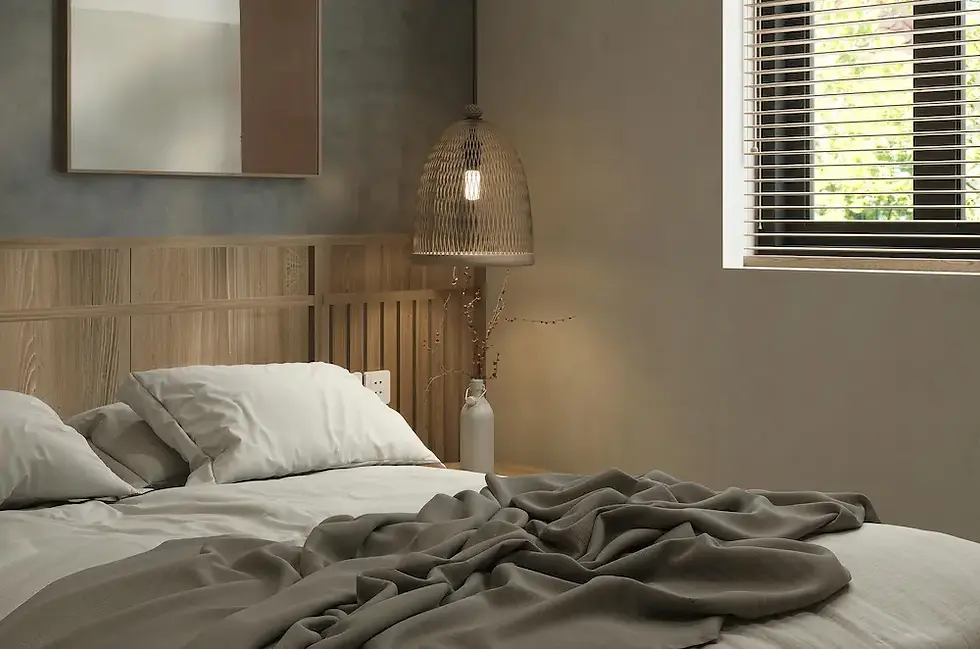
Rule 6: Start With the Bedroom, Not the Living Room
The bedroom is where Warm Minimalism has the greatest impact on mental health. Clear surfaces, quality bedding in neutral tones, no screens if possible.
For everything about making a small apartment feel intentional and breathable in 2026 the bedroom section alone is worth reading if you are working with limited square footage.
Action: Clear your bedside table completely. Return only what you use every single night. Nothing else.
Rule 7: Never Sacrifice Function for Aesthetics
A beautiful shelf with nothing useful on it is a prop. Minimalism should make your life easier less to clean, less to maintain, less visual noise pulling at your attention. If removing something makes your daily routine harder, it stays.
Action: Walk through your home and identify the three things that cause the most friction in your day. Remove or relocate those first. Function always comes before aesthetics. For a complete guide to where warm minimalist furniture is sold in the US, our furniture stores ranking covers the full market.
The Mental Health Case for Warm Minimalism
Research published in the Journal of Environmental Psychology has consistently found that visual clutter increases cognitive load and baseline stress. A cluttered room is measurably more tiring to be in than a calm one you are not imagining it.
Key facts: Visual clutter raises cortisol measurable within minutes of entering a disorganised space. Warm neutrals such as greige and warm white reduce cognitive load the brain processes less competing information. Natural materials activate the biophilic response the nervous system reads wood, stone, and linen as safe environment. 2700K warm lighting lowers arousal compared to 5000K cool white.
But there is a nuance that often gets missed: it is not the number of objects that causes stress it is the lack of intentionality. A carefully arranged shelf with fifteen objects feels calmer than a bare shelf with three things randomly placed.
The science behind how specific colours directly shift your emotional state is worth understanding before any decorating decision. Warm tones calm the nervous system. Cool whites activate it.
The Beauty of Meaningful Objects
There is a phrase I keep coming back to: intentional clutter.
A bowl your mother made. Three books you return to every year. A single plant that has survived three apartments with you. These are not clutter they are the biography of a life lived in a space.
The shift away from buying matching furniture sets and towards curating individual pieces with history, character, and meaning is one of the defining interior trends of 2026.

Warm Minimalism Quick Reference
Core principles: Intentionality every object earns its place. Warmth over whiteness greige, warm white, earthy neutrals, never stark white. Quality over quantity one linen throw outperforms ten cheap cushions. Layered lighting 2700K, minimum three sources per room. Negative space empty areas are decisions, not failures. Function first never remove something that makes daily life harder.
Key numbers: 2700K only bulb temperature for Warm Minimalism. 60-30-10 base neutral / natural materials / one accent colour. 3 objects maximum per surface when editing. 2 weeks time to leave items in a box before deciding to let them go.
FAQ
Is minimalism still trendy in 2026?
Warm Minimalism is one of the dominant residential interior trends of 2026. The cold, all-white version that defined 2015 is fading earthy neutrals, natural textures, and intentional objects have replaced it entirely.
What is the difference between Warm Minimalism and Cold Minimalism?
Cold Minimalism is about subtraction stark white, bare surfaces, zero objects. Warm Minimalism is about intentionality keeping only what earns its place, in warmer neutrals and natural materials. The result feels calm and inhabited rather than sterile.
What colors are used in Warm Minimalism?
Warm beige, mushroom, greige, and terracotta are the core palette. Stark white is avoided. Specific references: Benjamin Moore White Dove, Farrow & Ball Elephant's Breath, warm white HEX range #F5F0E8 to #EDE8DC, greige HEX range #C4B5A5 to #B8A898. One accent color sage, mustard, or deep navy used consistently rather than multiple competing palettes.
Is Warm Minimalism right for me?
If cluttered spaces make you anxious, Warm Minimalism will genuinely improve your daily wellbeing. If you find all-white interiors cold or difficult to maintain, the warm version is specifically designed for that. Start with one room the bedroom has the greatest impact on mental health and is the easiest place to begin.
Is minimalism expensive?
It does not have to be. The principle is buying less but buying better one quality linen sofa lasts a decade; three cheap ones cost more and look worse. The transition has an upfront cost if you are replacing synthetic materials with natural ones, but ongoing spending drops significantly.
What is the difference between Japandi and Minimalism?
Minimalism is a philosophy about reduction. Japandi is a specific aesthetic a fusion of Japanese wabi-sabi and Scandinavian hygge that expresses minimalist values through particular materials: natural wood, muted colors, handmade objects. All Japandi is minimalist; not all minimalism is Japandi.
Can minimalism work in a small apartment?
Small apartments are actually where minimalism works best. Fewer objects create more breathing room and better light.
How long does a minimalist transition take?
A weekend for the bedroom. A week for a whole apartment if you are decisive. Three months if you are doing it gently and thoughtfully - which is the recommended approach for lasting results.
Does minimalism mean no color?
Absolutely not, especially not in 2026. Warm Minimalism embraces terracotta, sage, mustard, and deep navy. The key is intentionality: one accent color used consistently, rather than multiple competing palettes. What is the difference between warm minimalism and Japandi?
Both reject clutter and embrace natural materials. Japandi is a specific aesthetic - Japanese wabi-sabi meets Scandinavian hygge - with low furniture and strict negative space. Warm Minimalism is broader - it allows more personal objects, warmer colors, and a lived-in quality. For a full Japandi breakdown, see our Japandi interior design guide.
Where can I buy warm minimalist furniture in the US?
Article and Castlery both make clean-lined, natural-material furniture that fits warm minimalist interiors. For a full ranked list, our best furniture stores guide covers every price tier for US homeowners.
What is the difference between warm minimalism and Japandi?
Both reject clutter and embrace natural materials. Japandi is a specific aesthetic - Japanese wabi-sabi meets Scandinavian hygge - with low furniture and strict negative space. Warm Minimalism is broader - it allows more personal objects, warmer colors, and a lived-in quality. For a full Japandi breakdown, see our Japandi interior design guide.
Quick Recap: Your 7-Step Warm Minimalism Action Plan
Step 1: Swap one white wall for a warm neutral this weekend warm beige, mushroom, or greige. Step 2: Replace one synthetic textile with genuine linen or wool. Step 3: Clear one shelf return only three objects you genuinely love. Step 4: Replace all bulbs in your main living space with 2700K warm white. Step 5: Adopt one-in, one-out identify what leaves before anything new arrives. Step 6: Start in the bedroom greatest mental health impact, easiest to maintain. Step 7: Never remove something that makes your daily life harder function comes first.
Love our ideas? Let's bring them into your home. WarmCazza now designs rooms like this, remotely - your own concept, layout and shopping list. Explore E-Design →
About Nina Sajaia
Nina Sajaia is the founder of WarmCazza and has been writing about interiors, slow living, and the psychology of home since 2021. Her work on Japandi and Warm Minimalism has been shared across interior design communities in Europe and the US. She lives in a warm minimalist 58m² flat where a ceramic bowl from her grandmother has pride of place on the living room shelf.
This article was written by WarmCazza and is informed by established interior design theory, visual perception research, and current global residential design trends. All recommendations reflect US retail availability as of June 2026 © WarmCazza All Rights Reserved.


Comments