
How to Choose a Rug: A Warm Minimalist's Complete Guide
Updated: Sep 2
This post contains affiliate links. If you buy through them, I may earn a small commission at no extra cost to you.
I've bought rugs for two very different homes: my own place, which is small and warm-minimalist down to the last shelf, and our family country house, which is boho in the most unapologetic way. Pattern on pattern, baskets everywhere, nothing matching on purpose.
Figuring out how to choose a rug for two homes that disagree about everything taught me something most guides skip: the rules don't change between styles. The rug is the largest uninterrupted block of color and texture in almost any room. It sets the temperature of the space before a single piece of furniture gets a say. Get it right and a modest room reads intentional. Get it wrong (too small, too cool, too thin) and even good furniture looks like it's waiting for the movers.
This guide is everything I now check before buying: the sizing rules designers actually use, a color system that works with real wall colors, a materials breakdown with no marketing gloss, and where I'd put my money in every room. The promise is the same one behind everything on this site, from warm minimalism on down: the quiet luxury look, on a budget you don't have to pretend about.
What Designers Want Underfoot in 2026
The short version: the gray flatweave era is over, and floors are getting warmer.
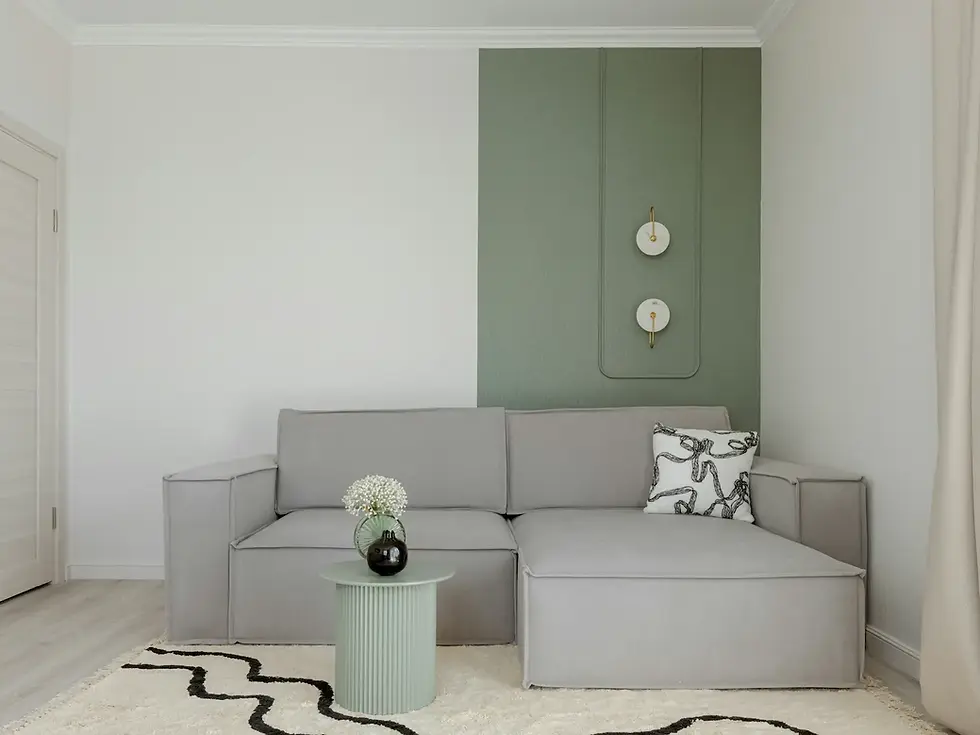
Designer Kathy Kuo told Homes & Gardens that 2026 interiors are moving toward layered, personality-rich rooms, and rugs are following suit. She expects thick braided weaves, plush high piles, and soft Moroccan-style pieces to lead. In the same feature, designer Christina Cruz pointed to tonal, monochromatic rugs in layered blues, mossy greens, terracotta, and softened burgundy, chosen to echo the sofa's color family instead of fighting it.
Vintage isn't going anywhere either. Atlanta designer Liz Williams told Better Homes & Gardens that antique and vintage rugs are mainstays heading into 2026.
And the quiet commercial story of the decade: machine washable rugs stopped being a compromise. The category has grown up from thin printed mats into pieces that hold their own visually, and retailers report demand for washable lines climbing by double digits. One industry report puts the jump for washable and customizable rug collections at 27 percent, and the Amazon shelf tells the same story.
My filter for this site: take the texture, the tonal warmth, and the vintage character. Skip the loud irregular shapes in small rooms. They photograph well and live badly.
How to Choose a Rug That Lasts: The WarmCazza Flip Test
The WarmCazza Flip Test is a five-step quality check for buying a rug: backing, pile density, edge binding, fiber content, and wash protocol. Before any rug earns a recommendation here, it goes through the same five checks, the floor-level cousin of my furniture knock test. You can run it in a store in ninety seconds, or in reviews and listing photos online.
Flip it. The back tells the truth. A woven backing means the pile is anchored in the structure. A stiff glued felt or latex sheet means the rug is held together by adhesive. It will crack, smell, and shed from the roots.
Pinch the pile. Press your fingers to the base. If you can see the backing through the tufts in the listing photos, the weave is sparse and will crush flat in a doorway within months.
Check the edges. Bound or serged edges are the difference between a rug and a mat. Raw, thin overlocked edges are the first thing to fail, and the top complaint in one-star reviews.
Read the fiber like an ingredients label. Wool, cotton, jute, recycled PET, polyester. Each is a different contract with your household. More on that below.
Ask the wash question. If it says machine washable, look for an actual protocol: cold, gentle cycle, air dry. A listing that promises washability without instructions is promising something it hasn't tested.

Size First, Style Second
Every designer I've ever read agrees on the cardinal sin, and it isn't color. It's the postage-stamp rug floating in the middle of the room with furniture huddled around it.
The working rules, straight from people who place rugs for a living:
Living room: at least the front legs of the sofa and chairs sit on the rug. For most American living rooms that means an 8x10 or 9x12. Lulu and Georgia's staff stylist calls those the right sizes for nearly every seating arrangement, with 16-18 inches between sofa and coffee table.
Dining room: the rug should extend about 36 inches past the table edge on all sides, so chairs stay on it even when pulled out. That usually means 8x10 minimum for a six-seat table.
Bedroom: run the rug 18-24 inches beyond the sides of the bed, enough that your first step in the morning lands on something soft instead of cold plank.
Everywhere: leave a visible border of floor. Many designers work to a 12-18 inch reveal around the room's edge so the space still breathes.
British design writer Kate Watson-Smyth has the rule I actually shop by: buy the biggest rug your room and budget can take. And a trick I borrowed from Connecticut designer Deborah von Donop: tape the rug's footprint on the floor with painter's tape before you buy. Thirty seconds of tape has saved me from two returns.
Here's the part that matters most in a small home: a bigger rug makes a small room look larger, not smaller. A rug that reaches under the furniture reads as floor. A small one reads as an object taking up floor. If you're deciding between two sizes for a compact living room, size up. A neutral 8x10 low pile area rug in a warm oatmeal will do more for the sense of space than any mirror trick.
Color: Match the Room's Temperature, Not Its Objects
Forget "what color goes with a gray couch." The better question is what undertone your room already has. From there, the rug either harmonizes with it or deliberately warms it up. That undertone question is the same one I explore in depth in Interior Color Psychology 2026.
Three principles do most of the work:
Repeat a tone that already exists. Pull one color from the sofa, the curtains, or the wood, and let the rug carry it in a quieter register. Tonal rooms read expensive. Matchy rooms read like a showroom bundle.
Respect the 60-30-10 split. Watson-Smyth's classic proportion rule: 60% dominant (usually walls), 30% secondary (large furniture and the rug), 10% accent. The rug almost always lives in the 30. When a rug shouts for the 60, the room tips into theme park.
Warm beats cool at floor level. Floors are where coldness registers first, literally and visually. When in doubt, choose the warmer of two options.
The pairing map I use, based on the room you already have:
Beige or greige room: ivory with heavy texture, soft clay, muted olive. Avoid gray-beige rugs one shade off from the wall. The almost-match is worse than contrast.
White-wall minimalist room: warm oatmeal or camel to thaw the white. A washed terracotta vintage style rug if the room needs a pulse, or a faded Persian-style pattern if the furniture is very plain.
Sage or green room: cream, camel, washed rust. Green walls are already doing the color work. The floor's job is warmth.
Dark or moody room (navy, charcoal, forest): two honest roads. Deep tonal in espresso, charcoal, or ink for the enveloping look. Or a light, textural counterpoint like an ivory wool or a natural jute area rug to keep the room from swallowing light.
Warm wood floors (oak, walnut): don't fight red-toned oak with pink-beige. Go olive, ivory, or indigo. Walnut is more forgiving, and almost any warm neutral sits well on it. All of this is also the argument for buying the rug last. It is the only piece in the room that has to answer to everything else already standing in it, and you cannot match wood tones you have not chosen yet. When I furnished a friend's first apartment this year I left the rug until the very end, deliberately, after the nine pieces I bought around it.
At the country house, the lesson ran the other way. In a boho room the rug is allowed to carry the pattern, but I keep it inside two or three color families that already exist in the textiles. Boho that works is edited. It just hides the editing.

Materials, With No Marketing Gloss
Wool. The quiet luxury default for a reason: resilient, hides soil between cleanings, and ages instead of dying. Costs more upfront and outlasts everything else per dollar. Expect roughly $200-400 for a well-made 8x10 wool blend, and count on it outliving two rounds of anything cheaper. A dense ivory wool blend area rug is the closest thing to a can't-miss purchase in this entire guide.
Cotton flatweave. Light, casual, often washable, cheap to swap seasonally. Slides and bunches without a pad, and thin ones read dorm room. Best in kitchens, casual bedrooms, and layering.
Jute and sisal. Texture champions and a warm minimalist staple. They add depth without adding color. Honest downsides: scratchy barefoot, and they hold stains like a grudge. Keep them out of spill zones. Use them as a base layer or in low-mess rooms.
Recycled PET. The sleeper hit for dining rooms, entries, and outdoor-adjacent spaces. Modern PET is surprisingly soft, shrugs off moisture, and takes abuse. Yes, it's plastic, and up close it looks slightly like it. At knee height, nobody can tell.
Polyester and microfiber washables. The boom category, with the widest quality spread on the market. The failure mode is well documented: ultra-thin printed flatweaves that curl at the corners, fade in traffic lanes, and feel like paper. The fix is buying inside the category's upper half, usually $80-180 in the 5x7-to-8x10 range. Anything suspiciously cheaper is how the paper-thin ones announce themselves. Look for chenille or woven construction over flat prints, pile height of at least a third of an inch, and reviews that describe the rug after several washes. I'm publishing a fully vetted washable shortlist as a companion to this guide, built on the same flip test.
Viscose (also sold as "art silk"). Looks like silk in photos, water-spots like tissue in real life. Formal, low-traffic rooms only, which in a real house means almost never. The whole materials decision, at a glance:
Material | Best for | Watch out for | Price for an 8x10 |
Wool | Living rooms and bedrooms you plan to keep for a decade | Upfront cost; moths in storage | $200-400 for a blend |
Cotton flatweave | Kitchens, casual bedrooms, layering | Slides and bunches without a pad | $60-150 |
Jute and sisal | Texture in low-mess rooms; the base layer | Scratchy barefoot; holds stains | $100-250 |
Recycled PET | Dining rooms, entries, indoor-outdoor | Slight plastic look up close | $100-250 |
Polyester washable | Kids, pets, high-traffic reality | Thin printed flats that curl and fade | $80-180 |
Viscose ("art silk") | Almost nothing in a real house | One water spot ruins it | Skip at any price |

Room by Room: Where Your Money Works Hardest
Living Room
The highest-traffic, highest-visibility rug in the house, so this is where the budget goes. Go 8x10 minimum in most layouts, low-to-medium pile so doors and robot vacuums cooperate, wool if you can, dense PET blend if you can't. If the household is busy, a washable area rug 8x10 in a tonal pattern buys you five years of not panicking about coffee.
Bedroom
The one room where plush is rational. Your feet meet it barefoot, first thing, every day. Extend it well past the bed sides. This is also where light colors survive, since shoes rarely make it in.
Dining Room
Follow the 36-inch rule and go flatweave or low pile. Chairs need to glide, and crumbs need to vacuum out of a surface, not a forest. Patterns are your friend here because they forgive what toddlers and dinner parties do. A flatweave dining room rug 9x12 in a faded traditional pattern is the practical-beautiful sweet spot.
Entryway
The hardest-working three feet of textile you'll own. Washable, darker or patterned, and grippy. Look for a washable entryway runner non slip backed with real rubber, not foam dots.
Kitchen
Runners only, washable only. Anything you can't throw in the machine will meet olive oil eventually.
Home Office
Low pile, period. Chair casters and plush pile are a divorce waiting to happen. This is a great spot for flatweave wool: quiet underfoot on video calls, tough under wheels.
Nursery and Kids' Rooms
Washable, soft, and certified. Look for OEKO-TEX on the label. Mid-tone colors and small patterns hide the era of applesauce.
Small Homes: The Rug Is the Architecture
In a small home, rugs aren't decor. They're walls you can vacuum. In a compact apartment, furniture placement is basically solved by physics, so the rugs do the zoning: one defines the seating area, a runner defines the passage, and the boundary between them does the job a wall would. I've written a whole piece on zoning a studio without walls, and rugs are the first tool in it.
The small-space rules that earn their keep:
One rug per zone, and size each generously. Two right-sized rugs beat one timid one floating in the middle.
Low pile, low contrast. Visual calm is square footage you don't pay rent on.
Run the rug with the room's long axis. It stretches the space the way a runway stretches a hallway.
Let the border breathe. That 12-18 inch reveal of floor matters more in small rooms, not less.
And the most warm-minimalist advice in this entire guide: the smallest room might not need a rug at all. If the floor is good and the room is tight, negative space is a design choice. An empty run of warm wood can be the calmest thing in the house. More small-space strategy lives in my small apartment decorating playbook.

Kids, Pets, and Real Life
Connecticut designer Deborah von Donop gives parents and pet owners the same standing advice: go performance materials, research pile heights, and order samples before committing. She's right, and here's the field version:
Washable exists for you. This category boomed on the backs of American households with kids and pets, and it's earned its place, with the flip test caveats above. Chenille and woven washables survive. Thin printed flats don't.
Pattern is camouflage. A tonal pattern in mid-tones hides a week of real life between cleanings. Solid pale rugs are for households that don't include anyone under twelve or on four legs.
Wool hides more than you'd think. Its fiber structure conceals soil, which is part of why antique wool rugs survive a century of feet.
Cats and loop pile don't mix. Loops snag claws, so choose cut pile. Dogs are easier on rugs but harder on corners. Rubber-backed washables belong in their favorite rooms.
Skip viscose entirely. One water bowl incident and it's over.
The Honest Pros, Cons, and When to Skip the Rug
What a rug genuinely does: warms a room visually and literally, absorbs sound (the difference is startling in echoey minimalist spaces), defines zones, protects floors, and delivers more style per dollar than any other object its size.
What the industry doesn't advertise: rugs need maintenance or they become allergen storage. Cheap ones shed, off-gas, and curl. Anything without a pad is a slip hazard. And a wrong-sized rug actively makes a room worse. Worse than no rug at all.
When to skip: beautiful floor, small room, low mess. Let it breathe. A rug is a tool, not a requirement, and knowing when the answer is "none" is the most designer move available to civilians.
The Luxury Is in the Details Nobody Photographs
The pad is the upgrade. A quarter-inch felt-and-rubber pad makes a mid-priced rug feel three times more expensive, keeps it planted, and extends its life by years. If the budget forces a choice, buy the cheaper rug and the better felt and rubber rug pad, not the reverse.
Layering, done like the pros. Designers routinely float a smaller patterned or vintage piece over a large jute or sisal base. You get depth and texture without committing the whole floor to a print, and it's the budget path to a collected look: an inexpensive base, one good small rug on top.
Oversize on purpose. When a rug runs almost wall to wall with a slim reveal, the floor reads custom. That's the entire trick behind a lot of rooms you've saved on Pinterest.
Swap by season. A flatweave for the warm months, wool for the cold ones. The room resets twice a year for the price of storage space, and it's a habit worth stealing for any house that runs hot in summer.
Align the edges. Rug edge parallel to the sofa, sofa parallel to the wall. Crooked reads careless in a minimalist room faster than any stain.
Keep It Beautiful: Care in Five Lines
Vacuum weekly, no beater bar on loops or shags. Blot spills, never rub. Rotate the rug 180 degrees twice a year so traffic and sunlight age it evenly. For washables: cold, gentle cycle, air dry flat, and expect wrinkles. Roll the rug design-side out for a day and they release. Wool deserves a professional wash every few years, and it comes back looking newer than machine washables do after one.
And once the rug is down, the finishing pieces are what pull the whole room together. If you're gifting rather than decorating, my roundup of aesthetic home gifts covers exactly those pieces, all under $70.
FAQ
What size rug do I need for a living room?
Big enough that the front legs of all seating rest on it. For most rooms, that's an 8x10 or 9x12. If you're between sizes, go bigger.
What color rug makes a room look bigger?
A light, warm neutral close to your floor tone, in the largest size the room takes with a slim floor reveal. Continuity, not color, is what enlarges.
Are washable rugs worth it?
In entries, kitchens, dining rooms, and homes with kids or pets, yes, as long as you buy woven or chenille construction rather than thin printed flatweaves. In formal living rooms, quality wool still wins.
How much should I spend on a rug?
Spend in proportion to traffic: most in the living room, least in low-use rooms. A well-made 8x10 in the $150-350 range outperforms two cheap rugs replaced twice.
Do I really need a rug pad?
Yes. It's the difference in feel, safety, and how long the rug lives. It's also the least glamorous purchase in this guide and the one I'd never skip.
What is the best rug material for a home with pets?
Cut-pile washable rugs in chenille or woven construction, or wool if the budget allows. Wool hides soil and survives claws, and washables survive accidents. Skip loop pile with cats and skip viscose with everyone.
What is the WarmCazza Flip Test?
A five-step quality check I run before recommending any rug: flip it to inspect the backing, pinch the pile for density, check the edge binding, read the fiber content, and verify the wash protocol. It takes ninety seconds in a store and works from listing photos online.
TL;DR
Rugs set a room's temperature. Warm, textural, tonal is the 2026 direction, and the permanent warm minimalist one.
Size makes or breaks the room: front legs on the rug, 36 inches past dining tables, a 12-18 inch floor reveal, and always size up.
Match undertones, not objects, and keep the rug in the 30 of 60-30-10.
Wool for the long haul, jute for texture, quality washables for real life, viscose for nobody.
The pad is the cheapest luxury in the house.
And sometimes the most minimalist rug is none at all. About Nina Sajaia
Nina Sajaia is the founder of WarmCazza and has been writing about interiors, slow living, and the psychology of home since 2021. She created the WarmCazza knock test for furniture and the Flip Test for rugs, the two vetting frameworks behind every recommendation on this site. Her work on Japandi and Warm Minimalism has been shared across interior design communities in Europe and the US. She has assembled more IKEA furniture than she would like to admit and has strong opinions about which brands do it better.
Photos are stock images of similar models, not the exact items I bought.
This article was written by WarmCazza and is informed by current US furniture market research, ten months of documented owner feedback, and 2026 interior design trend analysis.
© WarmCazza - All Rights Reserved.


Comments